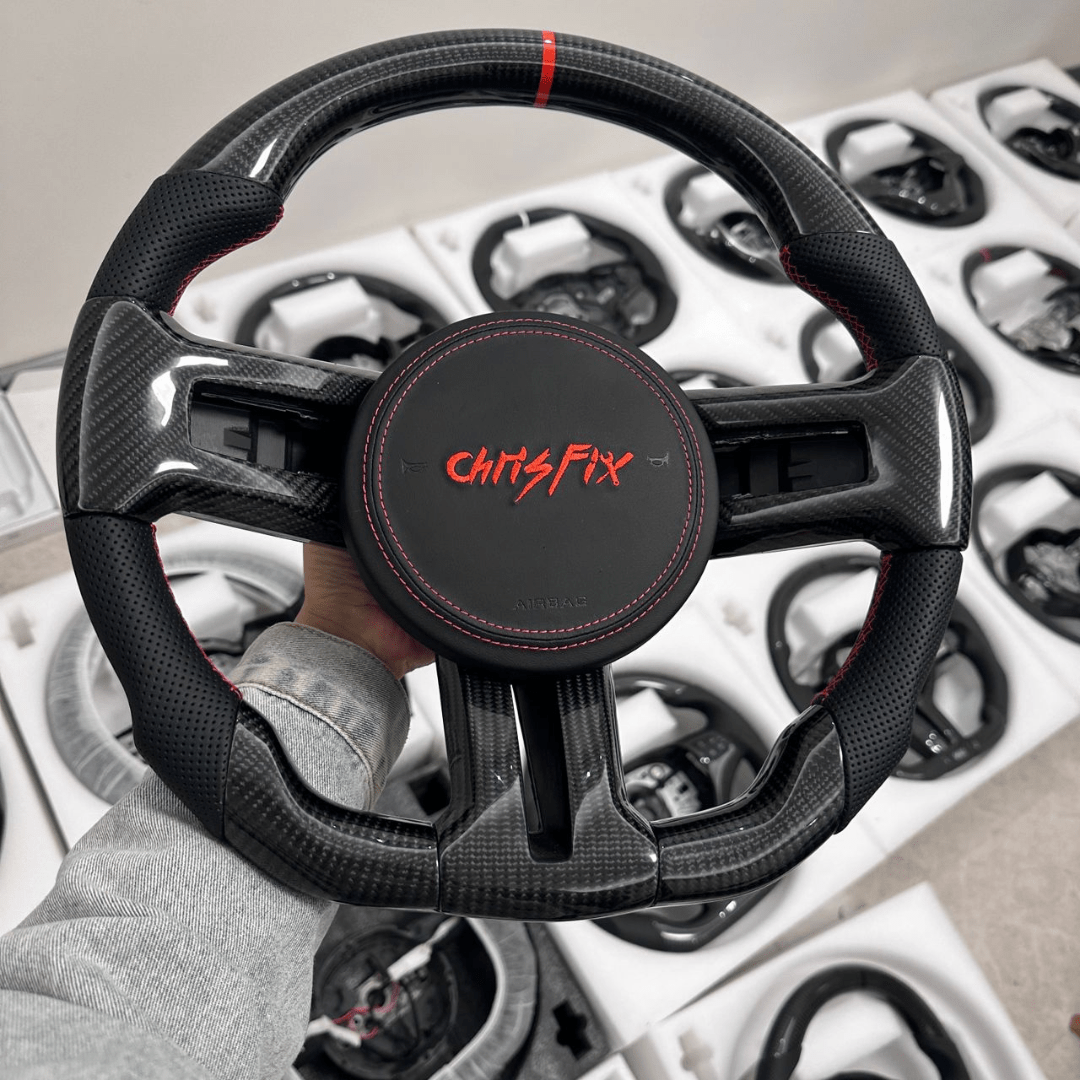

How to Install a Carbon Fiber Steering Wheel on Your BMW E36 (Step-by-Step)
Upgrade your steering wheel — custom carbon fiber made for your exact car model.
Shop Now →The E36 BMW 3-Series is a legend in the enthusiast community — lightweight, balanced, and endlessly tuneable. Whether you're running it as a track car, a weekend warrior, or a restored daily driver, upgrading to a carbon fiber steering wheel is one of the most satisfying modifications you can make. It transforms how the car feels in your hands and how it looks inside the cabin.
But installing a steering wheel on an E36 isn't quite like swapping one on a modern car. The E36 era predates many modern safety and electronic integrations, which actually makes the swap more accessible — but you still need to do it right. This guide covers everything: tools, the exact steps, and what to watch for.
Tools You'll Need
- Socket set (8mm, 10mm, 13mm minimum)
- Torque wrench
- Steering wheel puller (strongly recommended)
- Flathead screwdriver
- Phillips screwdriver
- Trim removal tool or plastic pry tool
- Marker or paint pen (for alignment marking)
- New center bolt and washer (if not included with wheel)
Critical Safety First: Disconnect the Battery
Before touching the steering wheel, disconnect the negative terminal of your battery. The E36 has a driver-side airbag in the steering wheel (on airbag-equipped models), and you must wait at least 15 minutes after disconnecting before working near it. Accidental airbag deployment is a serious injury risk and will destroy any wheel you've installed.
If you're working on a track-prepped E36 that has already had the airbag removed, you can skip the airbag precautions — but you still want the battery disconnected for safety.
Step 1: Remove the Horn Pad / Airbag Unit
On airbag-equipped E36s, the center pad contains both the horn mechanism and the airbag module. To remove it:
- With the battery disconnected and 15 minutes elapsed, grasp the center pad firmly.
- Pull straight toward you — the pad is held by two spring clips on the sides.
- Once loose, carefully disconnect the airbag wiring connector (yellow connector) and the horn connector.
- Set the airbag module aside face-up on a flat surface. Never place it face-down.
On non-airbag models or race-prepped cars, the center piece typically uses screws or a simple snap fit — remove accordingly.
Step 2: Mark the Steering Shaft Position
Before removing the nut, mark the position of the steering shaft relative to the wheel hub using a marker or paint pen. This ensures you can reinstall your new wheel in the same straight-ahead position. This step takes 10 seconds and can save you from having to re-align the wheel after installation.
Step 3: Remove the Center Nut
The steering wheel is secured by a single large nut (typically 24mm on the E36). Using your socket and ratchet, break this nut loose. Don't remove it completely just yet — leave it on a few threads. This is important for the next step.
Step 4: Use a Steering Wheel Puller
The E36 steering wheel is press-fit onto a splined shaft. It will NOT simply pull off by hand — you need a steering wheel puller. Attempting to yank it off by force can damage the column or injure you.
- Thread the puller bolts into the two threaded holes flanking the center of the steering wheel hub.
- Position the center bolt of the puller against the steering shaft.
- Tighten the puller evenly until the wheel pops free from the splines.
- Leave the nut on the shaft until the wheel breaks free — it prevents the wheel from flying into your face.
- Once loose, remove the nut completely and slide the wheel off the shaft.
Step 5: Inspect the Clock Spring / Slip Ring
With the wheel removed, you'll see the clock spring (also called a spiral cable or slip ring) — the coiled mechanism that maintains electrical contact between the rotating wheel and the fixed column. Inspect it visually for cracks or damage. Do not rotate the shaft excessively while the wheel is off — the clock spring has limited rotational travel.
Step 6: Prepare the New Carbon Fiber Wheel
Most aftermarket carbon fiber steering wheels designed for the E36 use a bolt-on hub adapter. If your wheel comes with a hub kit:
- Install the hub adapter onto the steering shaft, aligning it with your alignment marks.
- Thread on the center nut and torque to spec (typically 30–40 Nm — check your specific hub adapter instructions).
- Attach the steering wheel to the hub adapter using the provided bolts, tightening in a star pattern.
If your wheel uses a direct spline fit (less common with aftermarket wheels), slide it onto the shaft with alignment marks matched, and torque the center nut to spec.
Step 7: Connect the Horn
Most Carbon Clutch wheels include a horn button or center boss with horn contact. Connect the horn wire from the column to the appropriate contact on the hub or wheel. Consult the instructions included with your specific wheel — wiring varies by hub design.
Step 8: Reinstall or Cap the Airbag Circuit
Since you're removing the airbag-equipped hub, you'll need to address the airbag circuit. Options:
- Airbag resistor (recommended for street cars): Install a resistor (typically 2–3 ohm) in place of the airbag connector to prevent the airbag warning light from illuminating on the dash.
- Track car / already deleted: If the airbag system has already been removed or bypassed, this step is already handled.
Do not leave the airbag circuit open — on street cars, this will trigger a constant warning light and may affect other safety systems.
Step 9: Reconnect the Battery and Test
- Reconnect the negative battery terminal.
- Turn the ignition to the accessory position.
- Test the horn — press the horn button on your new wheel to confirm connection.
- Turn the steering wheel lock to lock to verify it moves freely and returns to center correctly.
- Check that the wheel is centered when the front wheels are pointed straight.
Step 10: Final Check and Test Drive
With everything connected and confirmed, take the car for a short test drive in a safe area. Verify steering feel, horn function, and that nothing feels loose or misaligned. The carbon fiber wheel should immediately give you a more connected, direct feel versus the stock unit — especially if you went with a smaller diameter, which is common with E36 upgrades.
Common Mistakes to Avoid
- Skipping the battery disconnect: Non-negotiable. Do it every time, wait the full 15 minutes.
- No alignment mark: You'll end up with a crooked wheel and have to redo it.
- Forcing the wheel off without a puller: This damages the splines and can cause column damage.
- Forgetting the airbag resistor: Constant warning light and potential system errors on street cars.
- Under-torquing the center nut: The wheel must be properly torqued — a loose steering wheel is dangerous.
Why Carbon Fiber Makes a Difference on the E36
The E36 is already one of the best-handling BMWs ever made — it's light, balanced, and communicative. A carbon fiber steering wheel amplifies exactly what makes the car special. The lighter weight reduces rotational mass, the smaller diameter (typically 320–340mm vs the stock 380mm) sharpens steering response, and the grip quality — whether Alcantara, leather, or bare carbon — gives you far better feedback than the aging stock unit.
Carbon Clutch's E36-compatible wheels are designed with enthusiasts in mind. Every detail — from the hub fitment to the grip thickness to the spoke layout — is chosen to complement the driving character of the car, not fight it.
Ready to Upgrade?
If you're ready to take your E36 to the next level, browse our full lineup of carbon fiber steering wheels at realcarbonclutch.com. Each wheel ships with everything you need and is backed by our fitment guarantee — if it doesn't fit your BMW, we'll make it right.
Shop Related Products
Browse Carbon Fiber Steering Wheels for the BMW
Shop BMW Wheels →View All Steering Wheels